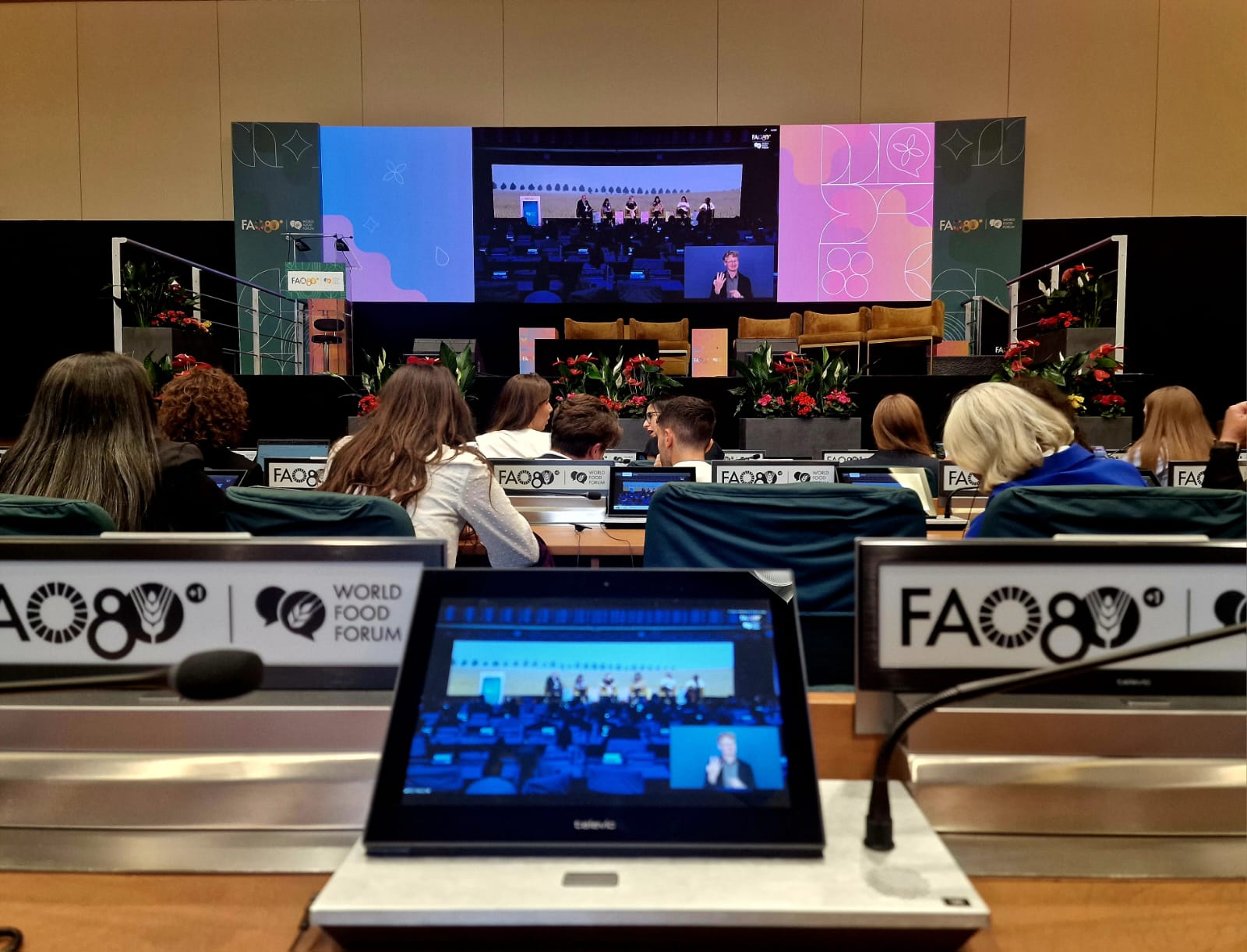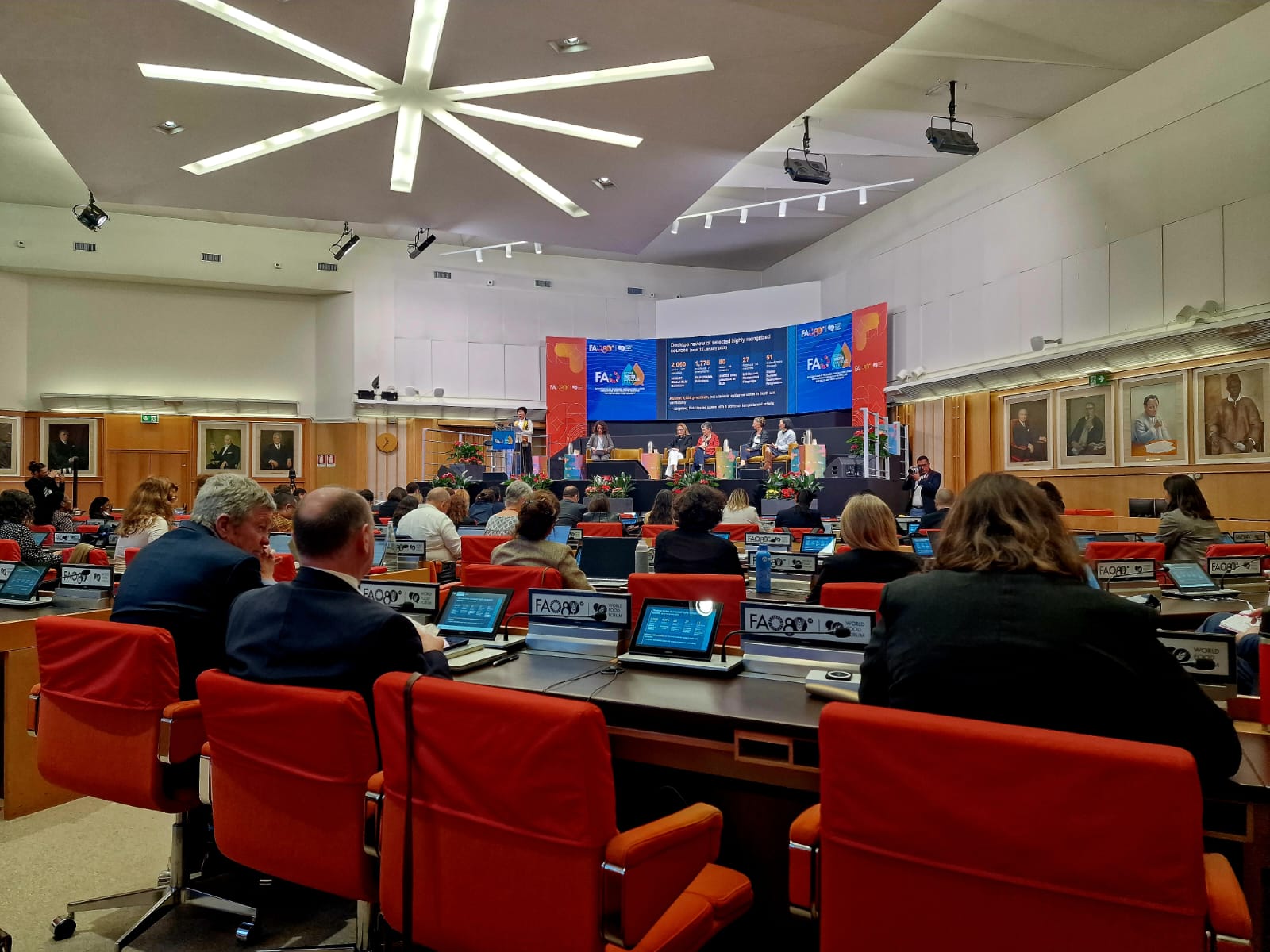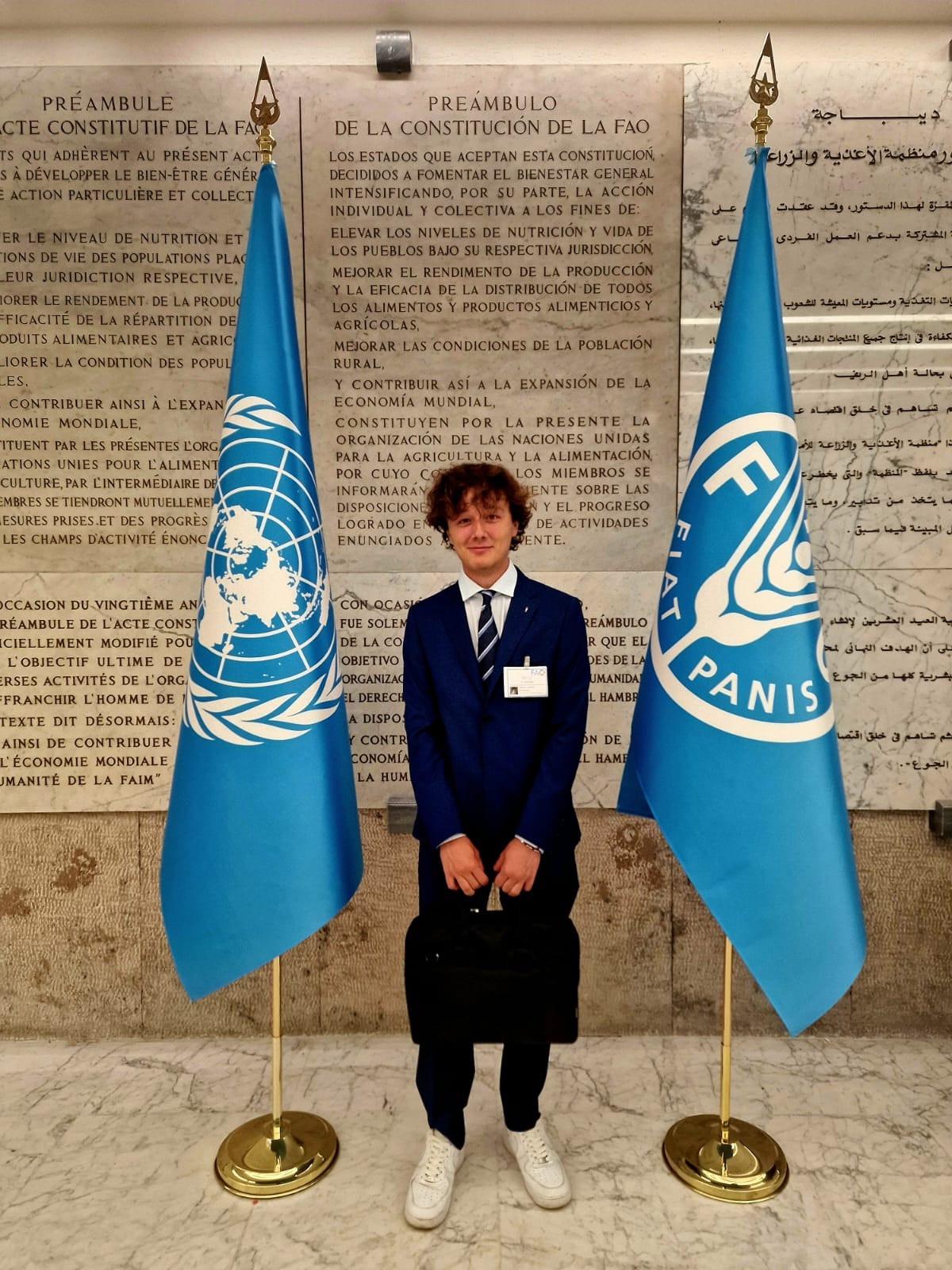
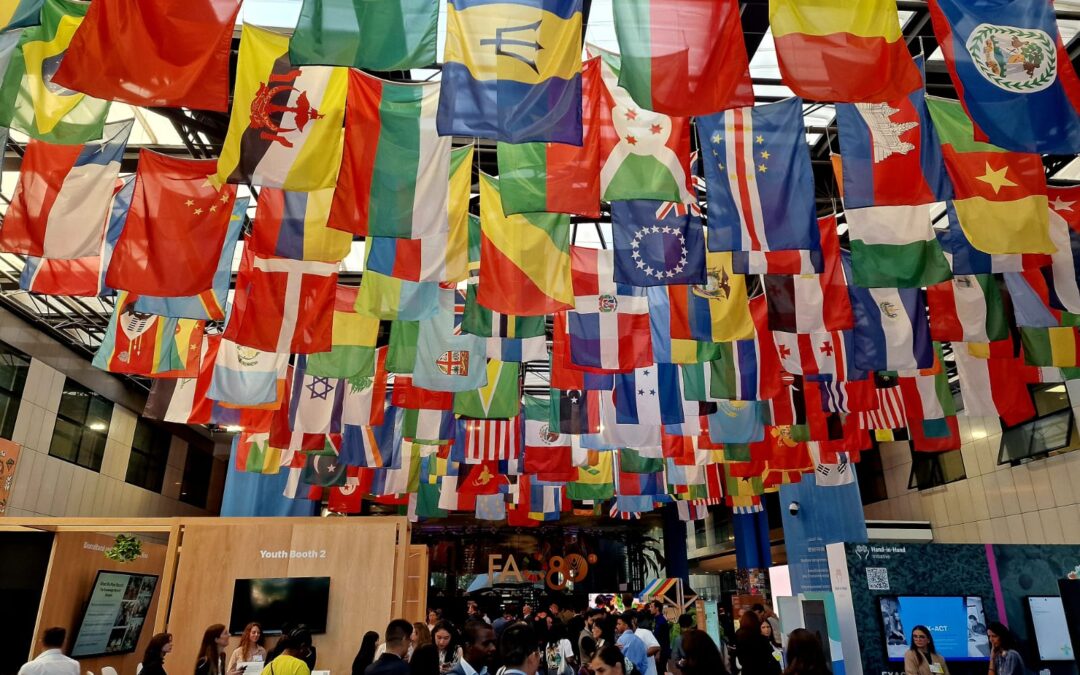
From 12 to 16 October 2026, Lorenzo Grasselli, one of the volunteer members of the ACTLAB team, represented Action Lab for Development (ACTLAB) at the 2026 World Food Forum and the Rome Water Dialogue, held at the Headquarters of the Food and Agriculture Organization of the United Nations (FAO) in Rome.
Under the theme “Innovate today. Nourish tomorrow.”, the Forum brought together young people, scientists, policymakers, innovators, investors and civil society to rethink how the world produces food, manages water and builds a more sustainable future. The week ended on 16 October with World Food Day, which also marks the anniversary of FAO’s founding in 1945.
Here are some of the key reflections Lorenzo brought back from Rome.
A new generation of researchers
One message stood out from the very first day: young scientists and emerging leaders are changing what research is for. In his report, Lorenzo reflected:
“The way young scientists and emerging leaders approach research is departing significantly from traditional academic models. Many of us are not just researching for the sake of knowledge production, but because we are deeply committed to turning research into action for real social change.”
For this generation, research is not an end in itself. It is a tool for solving real problems in real communities, from food insecurity and water scarcity to climate resilience and livelihoods.
Giving young people a real voice
Producing good solutions is not enough if no one makes room for them. Too often, the work of young researchers is not given the space it deserves. To drive real change, young people need to lead across the whole research process, from designing methods and collecting data to scaling solutions, and they need direct access to the people who make decisions.
Inclusion must also be real. Young people include young women, researchers from both formal and informal educational backgrounds, and people who bring different knowledge systems. This point is at the heart of ACTLAB’s work: knowledge does not come only from universities, but also from farmers, community leaders, Indigenous Peoples and grassroots innovators. It was fitting that the Forum’s programme included the Global Hub on Indigenous Peoples’ Food Systems.
Closing the digital divide: who builds the technology?
Technology and innovation were central to this year’s Forum, through its Science and Innovation Forum pillar. Lorenzo shared a reflection that links closely to ACTLAB’s own work on digital inclusion and AI literacy:
“Closing the digital divide is not just about expanding access to technology, but about who gets to build it. When we empower young women and grassroots innovators to lead tech-driven research and digital entrepreneurship, we ensure that emerging technologies are designed by and for the communities that need them most.”
Access matters, but so does ownership. When communities help create the tools they use, those tools are more likely to meet their real needs. This idea also guides ACTLAB’s AI workshops in Cameroon, where we help communities understand, question and shape new technologies.
Water at the heart of food security
Lorenzo also followed the Rome Water Dialogue, which took place as part of the Forum. Agriculture uses more than 72 percent of the world’s freshwater withdrawals, so there can be no food security without water security. The Dialogue focused on sustainable water management, including water governance, drought resilience, land restoration and irrigation, and included a Youth Assembly session on sustainable water management.
What ACTLAB takes home
Lorenzo’s reflections from Rome connect directly to the values that guide ACTLAB:
- Research should lead to action and real change in communities.
- Young people should lead, not just participate.
- Inclusion must be real: young women, informal learners and diverse knowledge systems all belong at the table.
- Technology should be built with communities, not only delivered to them.
We will carry these lessons into our work, from our engagement at the United Nations to our projects on the ground. Thank you, Lorenzo, for representing ACTLAB in Rome.
Read our announcement of ACTLAB’s participation in the 2026 World Food Forum and Rome Water Dialogue, and explore more stories on our Conferences page.