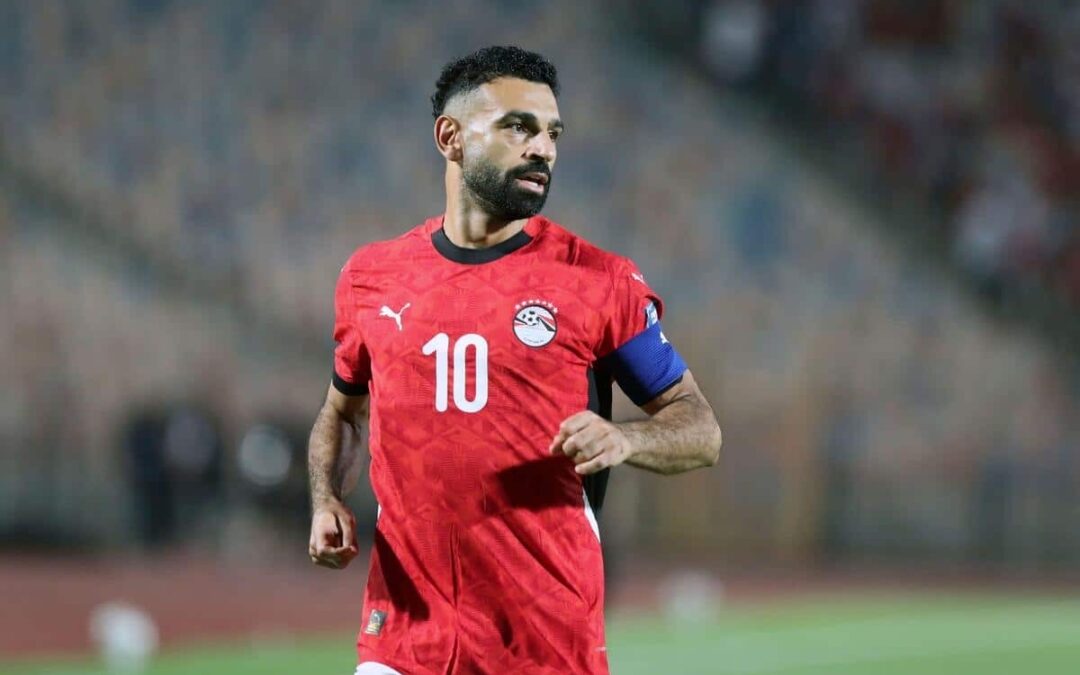
“I came from nothing, just a 14 year old kid with a big dream.”
These are the words of Mohamed Salah. Not pulled from a press conference or a branded campaign but a quiet acknowledgment of where he started. A small village. A family with modest means. A boy who loved football more than anything, and who dared to believe that love could take him somewhere.
It did. Further than most people dream.
But here is what the world does not always talk about: what he did when he got there.
Nagrig: The Village That Shaped Everything
To understand Mohamed Salah, you have to understand Nagrig.
It is a small, rural community in the Gharbia Governorate of Egypt the kind of place where life moves slowly and resources move even slower. Healthcare is not always close. Schools are not always well equipped. Clean water is not always guaranteed. Families stretch what little they have, and they do it with dignity.
Salah grew up inside that reality. He played football on its streets. He was shaped by its people. And when the world eventually came to know his name, Nagrig remained the truest part of him.
That connection is not sentimental. It is structural. Because when Salah had the resources to change things, he went home and he built.
What He Built
This is the part of the story that deserves more attention than it usually gets.
Mohamed Salah funded the construction of a hospital in Nagrig giving families access to medical care they previously had to travel hours to find. He established an ambulance station, because in moments of crisis, distance can be the difference between life and loss. He built a school, so that children growing up in his hometown could learn in a space designed for them. He invested in a water treatment plant, so that the community would have clean, safe drinking water something the rest of the world takes for granted far too easily.
And beyond infrastructure, he provides regular financial support to poor families in the village. Quietly. Consistently. Not for the cameras, but because he knows exactly what those families need and what it feels like to be one of them.
These are not donations made from a distance. They are investments made by someone who never stopped belonging to the place that raised him.
The Kind of Success That Lasts
There is a version of success the world loves to celebrate: trophies, goals, records, transfer fees. And Salah has all of that. He has won league titles, Champions League medals, and individual honors that put him among the greatest of his generation.
But there is another kind of success quieter, slower, harder to measure and it is the kind that actually endures.
It is the child in Nagrig who walks to school in a building Salah built. The elderly woman who reaches a hospital in time. The family that drinks clean water every morning without thinking twice about it. These are the outcomes that outlast any season, any contract, any highlight reel.
At Action Lab for Development (ACTLAB), this is the version of success we think about most. Because our work is built on a simple conviction: that the true measure of what a person has achieved is not what they accumulated, but what they created for others.
Salah’s story illustrates values that align with ACTLAB’s commitment to community driven development, youth empowerment, education, and social inclusion.
Sports as a Mirror for Society
Football, at its best, is one of the most unifying forces on earth. It speaks across languages, across borders, across generations. A single goal can bring an entire city to its feet. A single player can become a symbol for millions of people who have never met him and never will.
That symbolic power is real. But it is also fragile it only means something lasting when the person carrying it acts with intention.
What Salah has done in Nagrig is a reminder that athletes are not just entertainers. They are community figures. Role models. People whose choices on and off the pitch send signals to everyone watching about what matters, what is possible, and what is worth working toward.
When a man at the height of global fame turns toward his roots instead of away from them, that sends a message more powerful than any trophy ceremony.
It says: where you come from is not something to escape. It is something to invest in.
A Generation Watching
For young people growing up in underserved communities in Egypt, in Cameroon, in Canada, anywhere Mohamed Salah represents something specific and something important.
Not just the dream of becoming a professional athlete. But the possibility of rising from very little, reaching very far, and still choosing to carry your community with you.
That is a rare combination. And it is exactly the kind of example that shapes how a generation thinks about ambition, responsibility, and what it means to lead.
At ACTLAB, we work with young people every day who are navigating that question. Young entrepreneurs, students, and community leaders who are building something from very little and asking themselves what kind of impact they want to leave behind. Salah’s story speaks directly to them not as an unreachable icon, but as proof that greatness and generosity are not in competition. They belong together.
Conclusion: Redefining What It Means to Win
The world will always celebrate the goals. The records. The moments that end up on every highlight reel and every jersey.
But the real story of Mohamed Salah the one worth telling, and retelling is what he chose to do with everything football gave him.
He chose his village. He chose clean water over prestige. Schools over status. Hospitals over headlines.
He chose to define winning differently.
At ACTLAB, that is the definition we stand behind. Progress that includes everyone. Success that lifts others. Development that begins where people actually live in communities like Nagrig, and in every place where potential exists but resources have not yet arrived.
The greatest victories, it turns out, do not always happen on the pitch.
References & Further Reading
To ensure transparency and highlight the real world impact of community driven initiatives, the facts regarding Mohamed Salah’s contributions in Nagrig were verified through the following reliable sources:
- BBC News: Mohamed Salah: The Egyptian hero who has never forgotten his roots – Details Salah’s financial contributions to his hometown, including the construction of a hospital and a school.
- Reuters: Hometown hero: Salah brings hope to Egyptian village – Reports on the establishment of the ambulance station and regular financial assistance to local families.
- The National: How Mohamed Salah is helping to transform his Egyptian village – Covers his investment in the water purification plant to ensure clean drinking water for the community.
Action Lab for Development (ACTLAB) is an international civil society organization working toward a more just, inclusive, and equitable world through education, youth empowerment, human rights, and community driven development. Learn more at www.actlabs4dev.org